Subsurface Investigations in DC, Maryland & Virginia
Before you can design a foundation, you need to know what the foundation is sitting on. Subsurface investigations are the field work that answers that question — physically sampling the soil, measuring its resistance, observing groundwater, and collecting the data that every engineering decision downstream depends on. BOZ Engineering Group provides complete subsurface investigation services for residential and commercial projects across Washington DC, Maryland, Virginia, and Florida. Standard Penetration Test borings, Cone Penetration Testing, Shelby tube sampling, groundwater monitoring, and geophysical surveys — we scope the investigation based on your project's needs, mobilize the equipment to your site, and collect the data your foundation design requires. And because BOZ provides geotechnical analysis and structural engineering under the same roof, the field data from your subsurface investigation flows directly into the laboratory testing program, the geotechnical report, the foundation recommendations, and the structural foundation design — all without leaving our team.
Who This Is For
Developers and owners starting new construction — You need subsurface investigation data for the geotechnical report that the permit office, structural engineer, and civil engineer all require. We plan and execute the field investigation, collect the samples, and deliver the data your project team needs.
Contractors who need borings before foundation work — You are about to excavate and build a foundation, and you need to know what you are digging into. Subsurface investigations tell you the soil type, density, and groundwater conditions so you can plan the work and avoid surprises.
Structural engineers who need field data for foundation design — You are designing a foundation and need SPT blow counts, soil descriptions, and groundwater levels from a qualified subsurface investigation. BOZ field data is collected specifically to support structural foundation design.
Civil engineers who need subsurface data for site design — You are designing grading, stormwater infiltration, or retaining walls and need to know the subsurface soil conditions. Our investigation data supports civil engineering applications as well as structural.
Property buyers evaluating site conditions — You want to understand the subsurface conditions before purchasing a site for development. A targeted subsurface investigation reveals the soil type, depth to rock, groundwater conditions, and any geotechnical issues that could affect construction.
Need subsurface investigation data for your project? Call +1 202-998-5445 — we will plan the investigation, provide a fee, and get a drill rig on your site.
Why the Quality of Your Subsurface Investigation Determines the Quality of Everything After It
A subsurface investigation is the first link in the engineering chain. If the field data is incomplete, poorly collected, or improperly documented, every analysis that uses it inherits those flaws. Bearing capacities calculated from inaccurate blow counts are unreliable. Settlement analyses based on samples that were disturbed during collection produce misleading results. Groundwater observations that miss seasonal variations lead to foundations designed for conditions that do not represent the worst case. The quality of the geotechnical report, the foundation recommendations, and the structural foundation design can only be as good as the field data they are built on.
BOZ Engineering Group approaches subsurface investigations with the understanding that this data has to serve multiple engineering disciplines. The borings are located to characterize the soil beneath the building footprint, not just at random points. The sampling intervals are selected to capture changes in soil conditions with depth. Blow counts are recorded carefully because they directly inform bearing capacity calculations. Soil samples are collected, labeled, and transported to the laboratory in a manner that preserves their in-situ condition. Groundwater observations are made during and after drilling so both immediate and equilibrium water levels are documented.
Residential subsurface investigations typically involve 2 to 4 borings, while commercial investigations typically involve 5 to 15 or more borings. Each investigation is scoped individually based on the number and depth of borings, site access, and any special sampling requirements. Field work takes 1 to 2 weeks depending on the number of borings and site access conditions. The complete project timeline — field investigation through final geotechnical report — is typically 3 to 5 weeks.

Request a consult
call us now
Our Subsurface Investigation Process
Step 1: Investigation Planning
We review the project plans, building footprint, and site conditions to determine the number, depth, and location of soil borings. We coordinate with Miss Utility for underground utility locating and obtain any necessary permits for the drilling operation. The investigation plan is tailored to the specific project — not a one-size-fits-all template.
Step 2: Site Mobilization & Setup
Our geotechnical field team mobilizes the drill rig and support equipment to the site. Boring locations are staked and verified against the investigation plan. For sites with access constraints — tight residential lots, interior locations, or sites with overhead clearance issues — we select the appropriate equipment to fit the conditions.
Step 3: Drilling & Sampling
Borings are advanced using hollow-stem auger or rotary drilling methods. Standard Penetration Tests are performed at regular intervals — typically every 2.5 to 5 feet — recording the blow counts that directly measure soil resistance. Soil samples are collected in split-spoon samplers for classification and laboratory testing. Shelby tube samples are collected where undisturbed samples are needed for consolidation or shear strength testing.
Step 4: Groundwater Observation
Groundwater levels are measured in each borehole during drilling and again after the water level has stabilized. In some cases, monitoring wells are installed for long-term groundwater observation. Groundwater data is critical for foundation design, dewatering planning, and basement waterproofing requirements.
Step 5: Data Compilation & Laboratory Coordination
Boring logs are prepared with soil descriptions, blow counts, sampling depths, and groundwater observations. Soil samples are transported to the laboratory with chain-of-custody documentation. The field data package is delivered to the geotechnical analysis team for report preparation and foundation recommendations.
What Your Subsurface Investigation Includes
Investigation planning with boring locations based on building footprint and site conditions
Standard Penetration Test (SPT) borings with continuous blow count recording
Split-spoon soil sampling at regular intervals for laboratory testing
Shelby tube sampling for undisturbed samples where required
Boring termination criteria based on project requirements (depth to rock, competent bearing stratum)
Groundwater level observations during and after drilling
Detailed boring logs with soil descriptions, blow counts, and sampling information
Soil sample preservation and transport to laboratory
Coordination with utility locating services (Miss Utility) before drilling
Site restoration after investigation is complete
Ready to Find Out What Is Under Your Site?
Request a Subsurface Investigation Quote
Tell us what you are building and where, and we will plan the subsurface investigation, provide a fee and timeline, and get a drill rig on your site. From the borings in the ground to the foundation on the drawings — BOZ handles the entire chain. Licensed in DC, Maryland, Virginia, and Florida.
Frequently Asked Questions
Subsurface Investigation Questions — Answered by Our Team
Whether you are a homeowner building new, a contractor waiting on a soil report, or a developer scoping a multi-building site — we have the answers you need to move forward with confidence.
How much does a subsurface investigation cost?
Every subsurface investigation is scoped individually based on the number of borings, depth of borings, site access, and any special sampling requirements. Residential projects typically require 2 to 4 borings, while commercial projects may require 5 to 15 or more. BOZ provides a fixed, written fee proposal after reviewing your project so you know the full investment before field work begins. Call +1 202-998-5445 for a project-specific quote.
How long does the field work take?
Residential field work typically takes 1 day. Commercial field work takes 2 to 5 days depending on the number of borings and site conditions. The complete project timeline — from field work to final geotechnical report — is typically 3 to 5 weeks.
How deep do the borings go?
Boring depth depends on the project requirements. Residential borings typically extend 15 to 25 feet or until competent bearing material or rock is encountered. Commercial borings may extend 30 to 60 feet or deeper for multi-story buildings or deep foundation applications. We determine the appropriate depth during project scoping.
What is a Standard Penetration Test?
The SPT is performed by driving a split-spoon sampler into the soil using a 140-pound hammer falling 30 inches. The number of blows required to advance the sampler 12 inches is recorded as the N-value. This value is a direct measure of soil resistance and is used to estimate bearing capacity, relative density, and shear strength.
Will the drill rig damage my property?
Drill rigs used for geotechnical investigations are relatively compact and cause minimal disturbance. Borings are small-diameter holes that are backfilled after completion. For residential sites, we use equipment sized to fit the access constraints and restore the site after investigation. Any disturbed areas are returned to their pre-investigation condition.
Do you need to locate underground utilities before drilling?
Yes. We coordinate with Miss Utility (or the equivalent service in your jurisdiction) to locate underground utilities before any drilling begins. This is a standard safety requirement and is included in our investigation planning process.
What is Cone Penetration Testing (CPT)?
CPT is a method that pushes an instrumented cone into the ground at a constant rate, measuring tip resistance and sleeve friction continuously with depth. It provides a continuous soil profile rather than discrete measurements at sampling intervals. CPT is used on larger commercial projects where continuous profiling is valuable for understanding soil variability.
Can you do borings inside a building?
Describe the item or answer the question so that site visitors who are interested get more information. You can emphasize this text with bullets, italics or bold, and add links.
BOZ Engineering Group
From Feasibility to Final Permit.
Licensed in DC | Maryland | Virginia | Florida
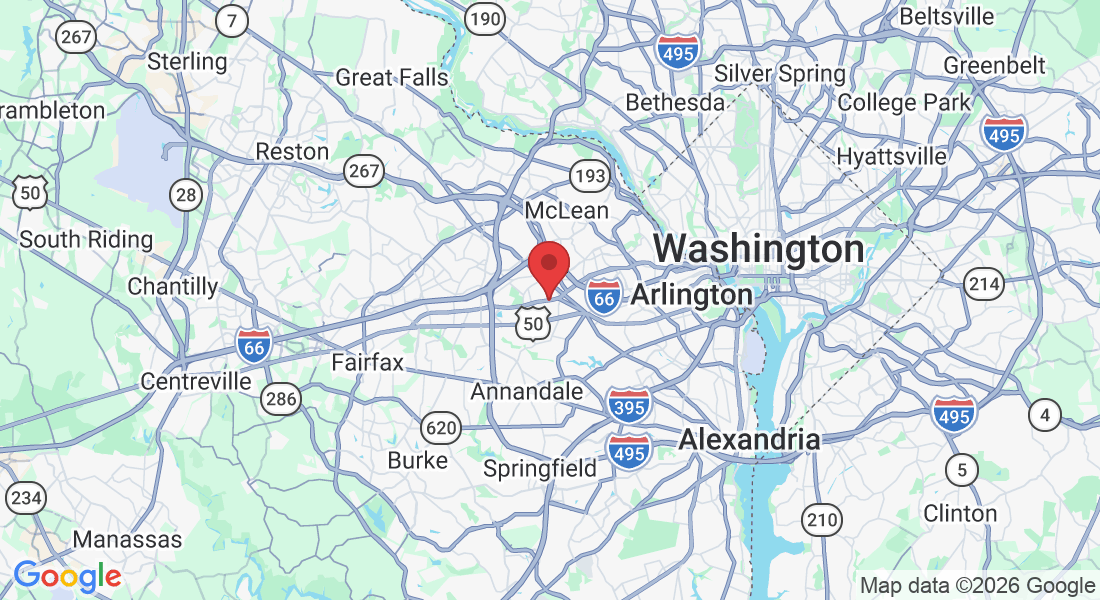
Address: 7181 Lee Hwy, Falls Church, VA 22046, United States
Email: [email protected]
Phone: +1 202-998-5445
Business hours
monday: 8am - 5pm
tuesday: 8am - 5pm
wednesday: 8am - 5pm
thursday: 8am - 5pm
friday: 8am - 5pm
Copyright 2026. BOZ Engineering Group. All rights reserved.
