Geotechnical Report Cost in the DMV (2026 Guide)
By Koray Bozkurt, PE, PMP - Founder & Principal Engineer, BOZ Engineering Group. Last updated August 2026.
Before you pour a foundation, add a second story, or build a retaining wall, one question quietly decides a big share of the budget: do you need a geotechnical report, and what will it cost? Geotechnical report cost in the DMV usually lands in the low thousands for a straightforward residential project [PRICE], and climbs from there when the soil is difficult, the site is tight, or the structure is large. The report itself studies what sits under your building, the soil, the rock, and the water, and whether that ground can carry what you plan to build on top.
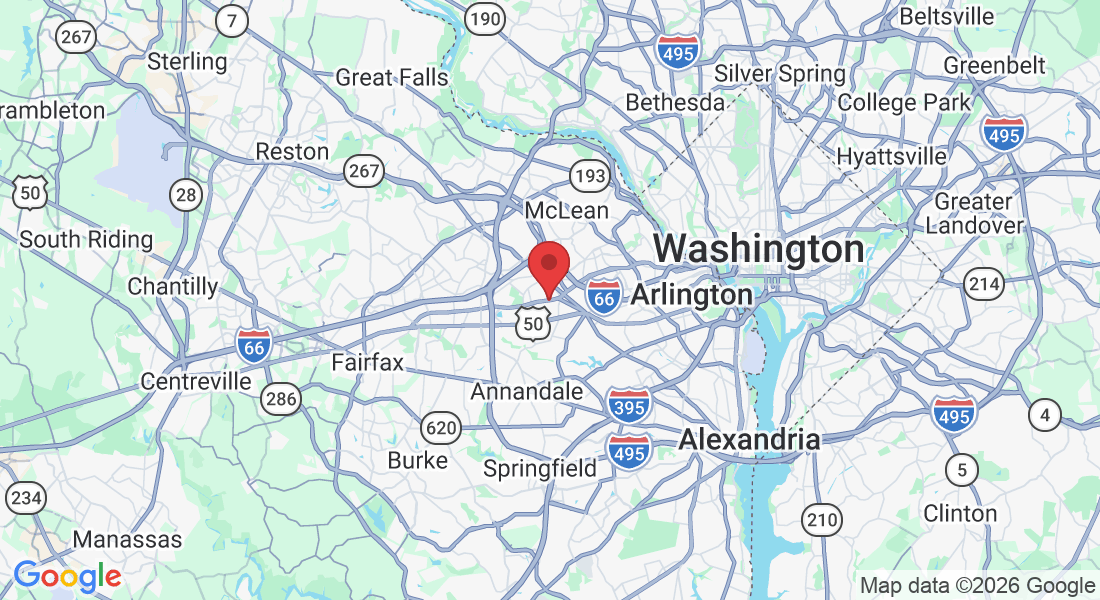
That study isn’t busywork. It’s often the difference between a foundation designed for the actual soil and one built on a hopeful guess. This guide covers what a geotechnical (soils) report is, what drives the price, when one is required, and how the clay and fill soils common across DC, Maryland, and Northern Virginia push more local projects toward needing one.
Key Takeaways
- A geotechnical report documents soil borings, penetration testing, groundwater depth, and load-bearing capacity, then gives an engineer the numbers to design a safe foundation, slab, or retaining wall.
- Under the International Building Code, a geotechnical investigation is required for specific conditions, including questionable soil, expansive soil, deep foundations, groundwater within 5 feet of the lowest floor, and shallow foundations bearing on more than 12 inches of fill (2021 IBC, Section 1803.5, 2021).
- Nationally, expansive and shrink-swell soils cause “a few billion dollars worth of damages” a year, “more than twice the damage from floods, hurricanes, tornadoes, and earthquakes” (Colorado Geological Survey, 2026). DMV clay puts many local sites in that conversation.
- Typical DMV residential geotechnical report cost runs a few thousand dollars for a small job [PRICE], driven mostly by how many borings you need and how deep they go.
What is a geotechnical report?
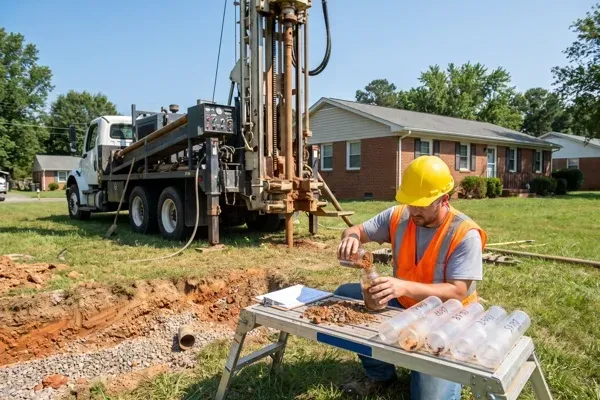
A geotechnical report is a licensed engineer’s written analysis of the ground under a proposed structure. It’s built from field data: soil borings (holes drilled into the ground to pull up soil samples), lab tests on those samples, groundwater readings, and Standard Penetration Test (SPT) results, which measure how many hammer blows it takes to drive a sampler a set distance and give a rough index of soil strength. From that data the engineer estimates bearing capacity, the load the soil can safely support, and writes recommendations for the foundation.
Think of it as the foundation’s foundation. It tells the structural engineer what the soil will and won’t do, so the footings, slab, or retaining wall can be sized correctly. Our geotechnical engineering work produces this report, and it feeds the foundation design and repair and structural calculations and reports that follow.
How much does a geotechnical report cost in the DMV?
For a typical DMV residential project, a geotechnical report usually costs a few thousand dollars [PRICE], with larger, deeper, or commercial investigations rising into five figures. The biggest driver is the number and depth of borings, since mobilizing a drill rig is where much of the money goes. A tight urban lot, hard rock, or a high water table all add cost.
Because pricing depends on the site, treat the table below as a planning guide, not a quote. When you’re weighing it against the rest of your engineering budget, our posts on structural engineer cost and foundation repair cost put the pieces side by side.
| Cost driver | Why it moves the price | Typical direction |
|---|---|---|
| Number of borings | Each boring adds rig time and lab work | More borings, higher cost |
| Boring depth | Deeper holes take longer and hit harder material | Deeper, higher cost |
| Site access | Tight lots and slopes slow the rig down | Restricted access, higher cost |
| Soil and rock conditions | Fill, expansive clay, or rock need more testing | Difficult ground, higher cost |
| Groundwater | Water within 5 feet of the floor adds analysis | Shallow water, higher cost |
| Project type | Commercial, deep foundations, or towers need more | Larger scope, higher cost |
The figures here are first-party typical DMV ranges [PRICE], not a published statistic. A small addition with two shallow borings sits at the low end. A mid-rise on deep foundations sits far above it.
When do you need a geotechnical (soils) report?
You need one whenever the building code or the jurisdiction says the ground has to be verified, and often it’s smart even when it isn’t strictly required. The International Building Code requires a geotechnical investigation for specific conditions, including questionable soil, expansive soil, deep foundations, a groundwater table within 5 feet of the lowest floor, rock strata that vary in strength, and shallow foundations that will bear on more than 12 inches of compacted fill (2021 IBC, Section 1803.5, 2021).
In plain terms, that covers a lot of real projects: new construction on an unknown lot, a second-story addition that adds load to existing footings, any retaining wall holding back a slope, a site that was filled years ago, or a jurisdiction that asks for soils data before it approves the design. Some structural designs also need a licensed engineer’s seal to clear plan review; Fairfax County notes that “unique structural designs require an RDP seal” (Fairfax County, 2026), and a geotechnical report often backs that stamped design.
Is it ever optional? Yes. On a well-understood site with proven soil, an engineer can sometimes design against the code’s presumptive bearing values instead. That’s a fallback, and it’s a call a structural engineer should make, not a homeowner guessing.
What’s inside a geotechnical report?
A geotechnical report is far more than a soil type. The IBC lists roughly two dozen items a written report must address, including soil boring logs, groundwater levels, foundation recommendations, settlement estimates, SPT hammer data with corrected values, and the engineer’s seal (2021 IBC, Section 1803.6, 2021). Taken together, those items let a structural engineer design footings, slabs, and walls to real conditions, not assumptions.
One of the most useful outputs is bearing capacity. When no soil investigation is done, the code allows conservative presumptive values, and the gap between soil types is large. The table below shows two of them from the IBC’s presumptive load-bearing table.
| Soil type (presumptive) | Allowed vertical foundation pressure |
|---|---|
| Clay, sandy clay, silty clay, clayey silt, silt and sandy silt | 1,500 psf |
| Sand, silty sand, clayey sand, silty gravel and clayey gravel | 2,000 psf |
Source: 2021 IBC, Table 1806.2, 2021.
A boring program often finds the real soil supports more than the presumptive value, which lets the engineer use smaller, cheaper footings. Sometimes it finds the opposite. That’s the surprise you want on paper, before it becomes a crack in a wall.
Why do DMV clay and fill soils drive the need?
Because the ground here moves, and moving ground is what geotechnical reports are built to catch. Nationally, expansive soils that swell when wet and shrink when dry affect “one in five” people, compared with “one in ten” for floods, and cause losses “more than twice the damage from floods, hurricanes, tornadoes, and earthquakes” (Colorado Geological Survey, 2026). The DMV isn’t the country’s worst expansive-soil region, but the clay-rich soils common across Northern Virginia and Maryland behave the same way on a smaller scale.
The IBC defines expansive soil by hard criteria, a plasticity index of 15 or greater, more than 10 percent of particles passing a No. 200 sieve, and an expansion index above 20 (2021 IBC, Section 1803.5.3, 2021). You can’t eyeball that. Add older lots that were graded and filled decades ago, and the soil under a footing is nobody’s guess until it’s tested. In our experience across the DMV, undocumented fill and seasonal clay movement are two of the most common reasons a project genuinely needs borings.
“The report is cheap insurance. Spending a few thousand dollars to know what the soil will actually carry is a lot easier than redesigning a foundation, or fixing one, after the ground has already told you the answer.” - Koray Bozkurt, PE, PMP
Who should perform your geotechnical report?
A licensed engineer with real soils expertise, ideally the same team that will use the report. At BOZ, geotechnical work is handled in house by a licensed Professional Engineer (PE) in DC, Maryland, Virginia, and Florida who is also WACEL certified in soil and foundation inspection, so the same judgment that reads the borings stands behind the foundation design. That continuity matters: a report handed between two firms can lose the reasoning that makes it useful.
Koray earned a master’s degree in geotechnical engineering and has personally overseen soils and foundation work across the DMV since 2008. When the geotechnical and structural engineering sit under one roof, the recommendations connect straight to a stamped, code-compliant design, and to the civil and site plan work when grading and drainage matter. If you’re buying a property and worried about what’s underneath, pairing a report with a structural inspection before buying a house gives you the full read.
Frequently Asked Questions
How much does a geotechnical report cost?
For a typical DMV residential project, expect a few thousand dollars [PRICE], with commercial or deep-foundation work rising into five figures. The main driver is the number and depth of soil borings, since mobilizing a drill rig is the largest single cost. Restricted site access, rock, and high groundwater all push the figure up.
Is a geotechnical report legally required?
Sometimes. The IBC requires a geotechnical investigation for specific conditions, including expansive soil, questionable soil, deep foundations, and groundwater within 5 feet of the lowest floor (2021 IBC, Section 1803.5, 2021). Your local jurisdiction may also require one before it approves a design, so confirm early.
What’s the difference between a soils report and a geotechnical report?
They’re the same thing. “Soils report” is the common name; “geotechnical report” is the technical one. Both describe a licensed engineer’s analysis of soil borings, penetration testing, groundwater, and bearing capacity, ending in recommendations for foundations, slabs, or retaining walls designed to the real ground conditions.
Do I need a geotechnical report for a home addition?
Often, yes. A second-story addition adds load to footings that were sized for less, and the code can require verifying the soil under expansive, filled, or questionable ground (2021 IBC, Section 1803.5, 2021). A structural engineer can tell you whether your specific project needs one.
How long does a geotechnical report take?
Most residential reports take a couple of weeks from scheduling to final document, driven by drill-rig availability, lab turnaround, and engineering analysis. Larger investigations with more borings, load testing, or seismic evaluation take longer. Booking the drilling early is usually the best way to keep a project on schedule.
Ready to find out what’s under your project?
If you’re planning new construction, an addition, or a retaining wall in the DMV, a scoped geotechnical report tells you what the soil can carry before you commit to a design. BOZ has served DC, Maryland, and Virginia since 2008, and you talk to the engineer who does the work. Schedule a consultation and we’ll tell you whether your project needs a soils report and what it will take.
The bottom line
Geotechnical report cost is mostly a function of how many borings you need and how deep they go, which is why a small residential job lands in the low thousands and a complex one climbs well past it [PRICE]. The report earns its keep by replacing assumptions with measured facts, so your foundation is designed for the soil you actually have.
In a region shaped by clay and old fill, that’s rarely wasted money. The smart move is to ask early, before the design is locked, whether your site needs the study. Talk to our geotechnical engineering team or learn more about BOZ, and you’ll get a straight answer on what your project requires.
Koray Bozkurt, PE, PMP is the founder and principal engineer of BOZ Engineering Group, a structural, civil, geotechnical, and MEP engineering firm serving Washington DC, Maryland, Virginia, and Florida since 2008. A licensed Professional Engineer in DC, Maryland, Virginia, and Florida, he holds a master’s degree in geotechnical engineering and is WACEL certified in soil, concrete, foundation inspection, and structural masonry. Learn more about Koray.