Land Disturbance Permit in DC, MD & VA (2026)
By Koray Bozkurt, PE, PMP - Founder & Principal Engineer, BOZ Engineering Group. Last updated August 2026.
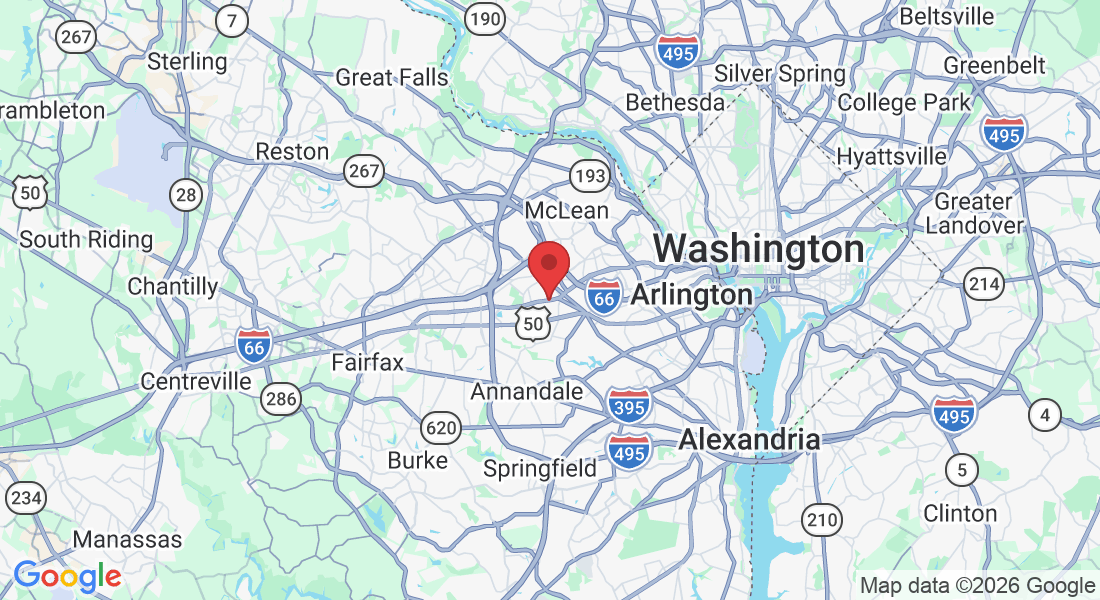
In the District of Columbia, disturbing more than 50 square feet of land, an area smaller than a parking space, can require an approved erosion and sediment control plan before you touch the dirt (DC DOEE, 2026). Cross the river into Fairfax County and the trigger jumps to 2,500 square feet. That gap is exactly why so many DMV projects stall: the rules for a land disturbance permit change at every jurisdiction line.
This guide explains what a land disturbance permit is, the square-footage and cubic-yard thresholds that trigger one in DC, Maryland, and Virginia, which plans have to go with the application, and what the review, inspection, and bond process looks like. You’ll also see what a stop-work order and fines can cost you if you grade first and ask later.
Key Takeaways
- Thresholds vary widely by jurisdiction. DC requires an erosion and sediment control plan at just 50 square feet of disturbance (DC DOEE, 2026), Fairfax County regulates at 2,500 square feet (Fairfax County, 2026), and Montgomery and Prince George’s Counties require a permit at 5,000 square feet or 100 cubic yards of earth movement.
- Virginia’s statewide floor is 10,000 square feet, dropping to 2,500 square feet inside a Chesapeake Bay Preservation Area (Code of Virginia 9VAC25-875-70, 2026).
- Any construction that disturbs one acre or more also needs a federal NPDES construction stormwater permit, or coverage under a common plan of development (U.S. EPA, 2026).
- A complete application usually pairs an erosion and sediment control plan, a stormwater management plan, and a grading plan, most of which carry a licensed engineer’s seal.
What is a land disturbance permit?
A land disturbance permit is a local government’s approval to clear, grade, excavate, or fill land, issued only after the jurisdiction reviews your plans for erosion, sediment, and stormwater control. It exists to keep soil and pollutants out of streams and storm drains while your site sits open. Depending on the county, it may be called a grading permit, a sediment control permit, or a land-disturbing activity permit.
The names differ, but the purpose is the same everywhere in the DMV. Once you strip vegetation or move earth, rain carries loose sediment off the site, and local and state programs, backed by the federal Clean Water Act, require you to plan for that before the first shovel goes in. In Virginia, that framework is the Virginia Erosion and Stormwater Management Program (VESMP); in Maryland it runs through each county’s sediment control program; in DC it’s the Department of Energy and Environment (DOEE).
What counts as land-disturbing activity?
Land-disturbing activity is any man-made change to the ground surface that could cause erosion or change how water runs off, including clearing, grading, excavating, and filling. Fairfax County defines it as “a man-made change to the land surface that may result in soil erosion or has the potential to change its runoff characteristics” (Fairfax County, 2026). It’s the disturbance itself, not the building, that pulls you into the permit.
That definition catches more projects than people expect. A new home, an addition with a big footprint, a pool excavation, a driveway expansion, a regraded backyard, or the earthwork behind a retaining wall that needs its own permit can all count. What matters is how much surface you disturb and how many cubic yards of earth you move, not whether there’s a structure at the end of it. A grading project with no building at all can still need a permit.
What are the land disturbance permit thresholds in DC, Maryland, and Virginia?
They range from 50 square feet in DC to 10,000 square feet across much of Virginia, so the same project can be exempt in one jurisdiction and regulated in the next. The table below lists the disturbance thresholds we confirmed directly on each authority’s official page. Where a cell says “confirm with jurisdiction,” treat that as a real instruction, because guessing the number is how a project earns a stop-work order.
| Jurisdiction | Permit / plan triggered when land disturbance is | Also watch |
|---|---|---|
| District of Columbia (DOEE) | 50 sq ft or more requires an erosion and sediment control plan (DC DOEE, 2026) | Stormwater management plan required at 5,000 sq ft (DC DOEE, 2026) |
| Virginia (VESMP, statewide floor) | 10,000 sq ft or more (Code of Virginia 9VAC25-875-70, 2026) | 2,500 sq ft or more inside a Chesapeake Bay Preservation Area |
| Fairfax County, VA | 2,500 sq ft or more (whole county is a Chesapeake Bay Act locality) (Fairfax County, 2026) | Rough grading plan required over 2,500 sq ft when not shown on another plan |
| Montgomery County, MD | 5,000 sq ft or more, or 100 cubic yards or more of earth movement (Montgomery County DPS, 2026) | Grading plans sealed by a Maryland-licensed PE |
| Prince George’s County, MD | 5,000 sq ft or more, or more than 100 cubic yards of soil (Prince George’s County, 2026) | Soil Conservation District review over 5,000 sq ft |
| Federal (EPA NPDES) | 1 acre (43,560 sq ft) or more, or part of a larger common plan (U.S. EPA, 2026) | Construction General Permit is separate from local approval |
One point trips up homeowners and contractors alike: these thresholds stack. A large Fairfax project can trigger the county’s 2,500-square-foot rule, Virginia’s VESMP, and the federal one-acre NPDES permit all at once. Miss any layer and the project isn’t fully permitted. If you’re comparing sites across the region, our guide to the building permit process in DC, MD, and VA shows how these approvals fit together.
What plans must accompany a land disturbance permit?
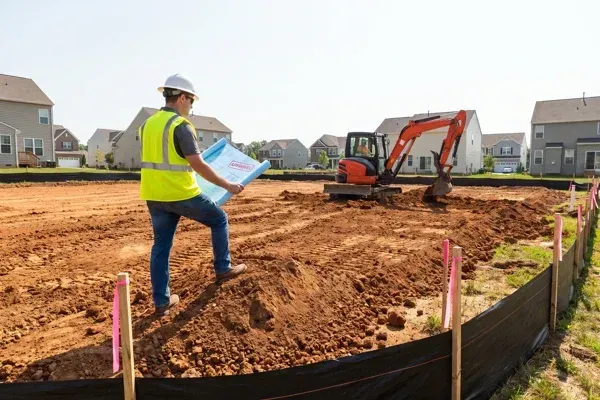
Most applications pair three plans: an erosion and sediment control (ESC) plan, a stormwater management plan, and a grading plan. The ESC plan shows the temporary measures, silt fence, inlet protection, stabilized entrances, that keep sediment on site during construction. The stormwater plan addresses the permanent runoff the finished site produces. The grading plan shows the proposed contours, cuts, and fills.
Which plans you need depends on how much you disturb. In DC, the ESC plan kicks in at 50 square feet, while a full stormwater management plan is required at 5,000 square feet (DC DOEE, 2026). In the Maryland counties, grading plans over the threshold must be prepared, signed, and sealed by an engineer licensed in Maryland. Our deeper dives on the erosion and sediment control plan and the stormwater management plan walk through what each one has to contain, and what a grading plan actually shows explains the third piece.
“The permit isn’t the goal, the approved plan set is. When the ESC, stormwater, and grading plans agree with each other and with the site, the review goes fast and the field stays out of trouble. When they don’t, you get comments, and comments cost weeks.” - Koray Bozkurt, PE
Getting these plans to agree is where a lot of submittals fall apart. A grading plan that fills a low spot the stormwater plan relies on, or an ESC layout that ignores the real drainage, comes back with review comments. In DC, resolving DOEE ESC plan review comments is often the difference between a two-week and a two-month approval. Our civil engineering and site plan team builds these three plans as one coordinated package so the reviewer sees a single, consistent story.
How does the review, inspection, and bond process work?
You submit the plan set, the jurisdiction reviews it against its ESC and stormwater regulations, and once it’s approved you receive the land disturbance permit. Many jurisdictions then require a performance bond or surety before you break ground, so there’s money in place to stabilize the site if work stops. Inspectors check the controls in the field during construction and sign off at the end.
The sequence matters. You install the perimeter controls first, get an initial inspection, then start clearing and grading. Inspectors return at milestones to confirm the controls are working. When the site is stabilized and the permanent stormwater measures are certified, the jurisdiction releases the permit and returns the bond. Because the timeline runs through several public reviews, our permit expediting service tracks each submittal, answers comments quickly, and keeps the approval moving. The site plan itself often doubles as the site plan for your building permit, so one drawing set can serve multiple approvals.
What happens if you disturb land without a permit?
You risk a stop-work order, daily fines, and an order to restore the site, and Virginia law lets civil penalties reach into the thousands of dollars per violation. Fairfax County is direct about it: disturbing 2,500 square feet or more without an approved plan “will result in a violation” (Fairfax County, 2026). Once a stop-work order lands, the whole project waits until you’re compliant.
The financial hit rarely stops at the fine. You may have to hire an engineer under deadline pressure, install emergency erosion controls, and sometimes undo grading you already paid for. An unpermitted disturbance can also surface during a property sale or a future permit. Paying for engineered plans up front is almost always cheaper than resolving a violation after an inspector shows up, and it reduces the risk of a rejected application and a halted job.
Frequently Asked Questions
How much land can I disturb without a permit in the DMV?
It depends entirely on the jurisdiction. DC requires an erosion and sediment control plan at just 50 square feet (DC DOEE, 2026), Fairfax County regulates at 2,500 square feet (Fairfax County, 2026), and Montgomery and Prince George’s Counties require a permit at 5,000 square feet or 100 cubic yards.
Is a grading permit the same as a land disturbance permit?
Usually yes, they’re two names for the same approval. Maryland counties tend to call it a grading or sediment control permit, Virginia localities call it land-disturbing activity approval under VESMP, and DC ties it to the erosion and sediment control plan. All of them approve the same act: clearing, grading, or filling land above the local threshold.
Do I need a federal permit too?
If your project disturbs one acre or more, yes. The EPA requires a National Pollutant Discharge Elimination System (NPDES) construction stormwater permit for any activity disturbing “1 acre or more of land,” or less than an acre when it’s part of a larger common plan of development (U.S. EPA, 2026). That’s separate from your local approval.
What’s special about Chesapeake Bay Preservation Areas?
The disturbance threshold drops sharply. Virginia’s statewide floor is 10,000 square feet, but inside a designated Chesapeake Bay Preservation Area it falls to 2,500 square feet (Code of Virginia 9VAC25-875-70, 2026). Fairfax County is a Chesapeake Bay Act locality countywide, which is why the whole county regulates at 2,500 square feet.
Who has to prepare and seal the plans?
For most regulated projects, a licensed Professional Engineer prepares the grading and stormwater plans and applies a seal. Maryland counties require grading plans “signed and sealed by a professional engineer, licensed to practice in the State of Maryland.” In the DMV, BOZ prepares these PE-stamped plan sets for DC, Maryland, and Virginia projects.
Talk to the engineer before you clear the site
Not sure whether your project crosses the threshold? The fastest way to know is a short conversation with the engineer who will actually prepare the plans. We’ll confirm the exact requirement for your address, your disturbance area, and the earth you plan to move, then build the ESC, stormwater, and grading package the jurisdiction expects. As a licensed PE firm serving the DMV since 2008, BOZ can tell you what your project really needs before you spend a dollar on clearing. Start with our civil engineering and site plan services or talk to the engineer who does the work.
The bottom line
A land disturbance permit comes down to one question with a different answer in every jurisdiction: how much ground are you disturbing? Fifty square feet triggers a plan in DC, 2,500 in Fairfax, 5,000 in the Maryland counties, and 10,000 across much of Virginia, with a federal one-acre layer on top. Get the threshold wrong and you’re looking at a stop-work order; get it right and the approval is a manageable, predictable process.
The smart move is to confirm the requirement and build coordinated plans before you clear, not after an inspector arrives. If you’re weighing a grading or construction project anywhere in the DMV, start with our permit expediting support or contact BOZ Engineering for a clear read on exactly which permits and plans your site needs.
Koray Bozkurt, PE, PMP is the founder and principal engineer of BOZ Engineering Group, a structural, civil, geotechnical, and MEP engineering firm serving Washington DC, Maryland, Virginia, and Florida since 2008. A licensed Professional Engineer in DC, Maryland, Virginia, and Florida, he is WACEL certified in soil, concrete, foundation inspection, and structural masonry, and personally oversees the engineering on every BOZ project. Learn more about Koray.