Who to Call for Water in Basement: Engineer or Contractor?
By Koray Bozkurt, PE, PMP - Founder & Principal Engineer, BOZ Engineering Group. Last updated October 2026.
Water on the basement floor starts a scramble for the phone, and the first number you dial often decides what gets fixed. Search for who to call for water in basement problems and you’ll find plumbers, waterproofing contractors, foundation-repair crews, restoration companies and structural engineers, each framing the problem around its own work. The clock is real, too: EPA advises drying water-damaged areas and items “within 24-48 hours to prevent mold growth” (EPA, 2026).
Every one of those trades has a real job to do. So who picks up first? It depends on the source, and the order matters. This guide covers who does what, which call comes first for your symptom, and when a structural engineer’s assessment belongs before anyone prices a fix.
Key Takeaways
- Standing water is a safety call first. CDC advises turning off the main power only from a dry location, and calling an electrician if you’d have to step into the water (CDC, 2026).
- Match the first call to the source: a plumber for supply and drain leaks, a restoration company for drying, and a look at gutters and grading before anyone sells a basement system.
- When water arrives with cracks, a bowing wall or sticking doors, call a structural engineer first. The code requires foundation walls “subject to hydrostatic pressure from ground water” to be designed “in accordance with accepted engineering practice” (ICC, 2021 IRC R404.1.1, 2021).
- An engineer’s assessment is independent of whoever installs the fix, so every contractor bids the same scope. DC’s licensing agency recommends estimates from multiple contractors (DC DLCP, 2026).
Who to call for water in the basement: which trade does what?
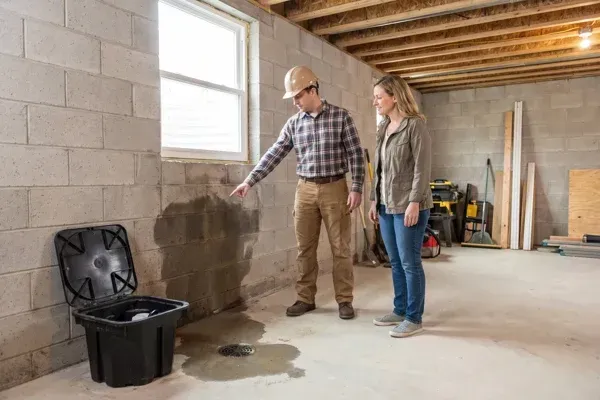
Call based on where the water is coming from. Plumbing leaks go to a plumber. Standing water and soaked materials go to a restoration company for drying. Rain-driven water that keeps coming back, especially with cracks or wall movement, goes to a structural engineer before a waterproofing or foundation-repair contractor prices the fix.
| Who | What they do | Call them first when | Usually outside their scope |
|---|---|---|---|
| Plumber | Supply and drain lines, water heaters, sewer backups | Water appears in dry weather or rises from a floor drain | Groundwater, grading, cracks |
| Restoration company | Extracts water, dries the space, removes wet materials | There’s standing water or soaked drywall | Fixing the entry point |
| Waterproofing contractor | Installs drains, sump pumps, membranes, crack injection | The source is known and the scope is written | Structural design |
| Foundation-repair contractor | Installs piers, anchors, bracing, underpinning | A structural repair has been designed | Stamped design, unless they bring in an engineer |
| Structural engineer | Diagnoses the source and structural condition, designs the repair | Water comes with cracks or bowing, or returns after every storm | Installing anything |
Nobody on that list is the wrong call. So where does it go wrong? When the order flips: a basement system sold before anyone checked the downspouts, or a crack sealed from inside while the wall behind it keeps moving. If you’ve already spotted early signs of foundation problems, the engineer moves to the front of the line.
The first 24 hours: safety, drying and evidence
Deal with safety, stop the water you can stop, and start drying. CDC advises turning off the main power only from a dry location, and having an electrician do it if you’d have to enter standing water (CDC, 2026). After that, EPA’s 24-48 hour drying window is what drives the restoration call.
If a supply line is leaking, close the main shutoff and call a plumber. Photograph the water line and the damage before anything moves, then call your insurer (our guide on whether home insurance covers foundation repair explains why the cause matters). Note where the water entered and whether it followed rain. It’s the first thing an engineer will ask.
Mold is the other clock. EPA says a moldy area under about 10 square feet can usually be handled by the homeowner, while larger growth points to its remediation guidance and, if you hire help, a contractor with mold cleanup experience (EPA, 2026). BOZ is an engineering firm and doesn’t do mold testing or remediation. Our role is the moisture source and any structural damage.
Which call comes first for your symptom?
The symptom usually points to the source, and the source points to the first call. Water in dry weather usually means plumbing. Water that follows rain is outside water finding a way in, so grading, gutters, footing drains and the wall itself need to be looked at together.
| What you see | Likely source | First call | Add an engineer when |
|---|---|---|---|
| Water near pipes or the water heater, any weather | Supply or drain leak | Plumber | Nearby framing looks damaged |
| Puddle at the wall-floor joint after heavy rain | Gutters, grading, clogged footing drains | Check gutters and downspouts | It follows most big storms |
| Water through a wall crack | Crack plus outside water pressure | Structural engineer | Before the crack is sealed |
| Horizontal crack or bowing wall | Lateral soil and water pressure | Structural engineer | Right away |
| Water seeping up through the slab | Hydrostatic pressure, high water table | Structural engineer | Before an interior system is priced |
| Damp walls, musty smell, no puddles | Humidity and condensation | HVAC or dehumidification | Sill plates or joists show damage |
Two outside checks cost almost nothing. The residential code requires the ground to fall at least 6 inches within the first 10 feet from the foundation (ICC, 2021 IRC R401.3, 2021). DOE’s Building America guidance lists downspouts that terminate at least 5 feet away from foundations as one way to control roof runoff (DOE Building America Solution Center, 2021).
Does your yard slope toward the house, or does a downspout dump right at the wall? Fix that first and watch the next storm. When the lot itself is the problem, regrading may call for an engineered grading plan. For damp air without puddles, EPA recommends keeping indoor humidity below 60 percent, ideally between 30 and 50 percent (EPA, 2026).
When is a wet basement a job for a structural engineer?
When the water comes with structural signs, keeps coming back after rain, or the fix will touch the foundation. The code draws that line itself: concrete or masonry foundation walls must be designed “in accordance with accepted engineering practice” where they’re “subject to hydrostatic pressure from ground water” (ICC, 2021 IRC R404.1.1, 2021).
Why does a leak fall under structural code? Because water pushing on a wall is a load. Locally, Fairfax County lists foundation repairs and waterproofing among residential work that requires a permit (Fairfax County LDS, 2026). Where foundation damage comes from problem soils, the county says such repairs “require the expertise of a geotechnical and/or structural engineer,” citing examples that include installing foundation drains and wall bracing (Fairfax County LDS, 2026).
Virginia adopted the 2021 I-codes effective January 18, 2024 (Virginia DHCD, 2024), while DC and the Maryland counties run their own permit review. The warning signs don’t change by jurisdiction: horizontal or stair-step cracks, a bowing basement wall, doors upstairs that suddenly stick, and soft framing near the wet area. Our explainer on what a structural engineer does covers the rest, and BOZ’s geotechnical engineering capability is in-house.
What does an engineer’s assessment give you that a free inspection can’t?
Independence and scope. A free inspection from a waterproofing company can be a useful look, but it’s built to produce an estimate for what that company installs. An engineer’s fee doesn’t depend on which repair you buy, so the assessment is free to conclude you need a downspout extension, a drainage redesign, a structural repair or some combination.
The engineer follows the water’s whole path: grade, gutters, window wells, neighbor runoff and the footing drain outlet outside, then crack patterns, plumbness and the framing above. The output that matters is a scope contractors can price. When three contractors bid the same written scope, you’re comparing prices, not diagnoses.
Our bowing basement wall guide answers the foundation-contractor version of this question in its FAQ, and the logic carries straight over. For fees, see our breakdown of structural engineer cost.
“A lot of the wet-basement calls I get turn out to be drainage problems outside the house. Find where the water comes from first. Then you know whether you need a waterproofing crew, a drainage fix, a structural repair, or all three.” - Koray Bozkurt, PE
Already holding a quote? A site visit from the engineer who designs the foundation repair can tell you whether its scope matches the source before you sign.
Is basement waterproofing worth it?
Yes, when it matches the source. It’s the right answer for groundwater pressing on a wall, and where a high water table or other severe soil-water conditions are known to exist, the code requires foundation walls to be waterproofed rather than just dampproofed (ICC, 2021 IRC R406.2, 2021). It’s money poorly spent when the real source is a gutter, a grade or a pipe.
The code also requires drains around concrete or masonry foundations that enclose habitable or usable space below grade (ICC, 2021 IRC R405.1, 2021), and a clogged or crushed footing drain can’t do that job.
What if the water is also moving the wall? Drainage won’t straighten a bowed wall, and bracing won’t stop water, so older DMV houses often need both, designed together. Our guide to foundation repair cost shows how the structural side breaks down.
Choosing among basement waterproofing companies
Start with the license, the permit and the scope. Maryland’s Home Improvement Commission lists waterproofing, foundations, grading, and gutters and downspouts among work that usually requires its license (Maryland MHIC, 2018). In DC, all home improvement contractors must hold a Home Improvement Contractor license (DC DLCP, 2026).
Virginia’s Department of Professional and Occupational Regulation licenses both contractors and Professional Engineers and offers an online License Lookup (Virginia DPOR, 2026). Maryland’s MHIC also advises paying no more than 1/3 of the contract price as a down payment and asking to see any required building permit before work starts (Maryland MHIC, 2026).
Then give every bidder the same written scope. Does each one deal with the outside water, or only the interior system? If the scope includes structural work, ask whose design it follows.
Frequently Asked Questions
Should I call a plumber or a waterproofing company for water in my basement?
Look at the weather. Water that appears in dry weather, near pipes, a water heater or a floor drain, is usually plumbing, so call a plumber first. Water that follows rain is outside water getting in. Check gutters and grading, then have the source diagnosed before any waterproofing system is priced or installed.
Is a free basement waterproofing inspection worth getting?
It can be, as one input. A free inspection is built to produce an estimate for that company’s products, which is useful once the source is known. If the water comes with cracks or bowing, get an independent structural assessment first so every bid prices the same scope. See structural engineer cost.
Do I need a permit for basement waterproofing in the DMV?
Often, yes. Fairfax County lists foundation repairs and waterproofing among residential work that requires a permit (Fairfax County LDS, 2026), and Maryland’s MHIC advises asking to see any required permit before work starts. Rules differ by jurisdiction. Our building permit guide for DC, Maryland and Virginia walks through the process.
How fast do I need to act on water in the basement?
Quickly. EPA advises drying water-damaged areas and items within 24-48 hours to prevent mold growth (EPA, 2026). Handle safety and drying first, then the diagnosis. The diagnosis can wait a few days, but wet drywall and carpet can’t. Note where and when the water entered while the evidence is fresh.
Will a structural engineer fix the leak?
No. An engineer diagnoses the source and the structural condition, then designs the repair, and licensed contractors do the installation. That split is the point, because the engineer’s recommendation isn’t tied to a product. At BOZ, the engineer who does the site visit is the one who designs the fix, and the contractor you choose builds it.
Talk to the engineer who does the site visit
If water keeps coming back after rain, or it arrived with cracks or a bowing wall, call an engineer before you sign a repair contract. BOZ Engineering Group has served the DMV since 2008, and Koray Bozkurt is a licensed Professional Engineer (PE) in DC, Maryland, and Virginia.
The engineer who does the site visit is the one who designs the fix, whether that’s foundation repair engineering or an engineered grading and drainage plan. Contact us to set up a visit, and bring your photos from the last storm.
The right call, in the right order
A wet basement usually needs more than one trade. The plumber stops the leak, the restoration crew dries the space, and contractors install the fix. The engineer makes sure that fix answers the actual source, and that any structural damage is part of the repair.
So make the safety and drying calls first, then get the source diagnosed before you buy a system. When you’re ready, talk to the engineer who does the site visit.
Koray Bozkurt, PE, PMP is the founder and principal engineer of BOZ Engineering Group, a structural, civil, geotechnical, and MEP engineering firm serving Washington DC, Maryland, Virginia, and Florida since 2008. A licensed Professional Engineer in DC, Maryland, Virginia, and Florida, he is WACEL certified in soil, concrete, foundation inspection, and structural masonry, and personally oversees the engineering on every BOZ project. Learn more about Koray.